
24 Modern Shag Haircuts That Suit Every Length and Texture
The shag you saved from social media probably looked perfect on hair nothing like yours.
That's why so many shag appointments disappoint, since this cut depends on texture more than most styles. Layers that wave softly on thick hair can turn stringy on fine strands, and curls spring up shorter than they were cut.
Modern shags solve much of this with lighter ends and fringe that grows out easily. Picking one that matches your texture and daily upkeep matters more than chasing the trend.
Jump to:
- Curtain Bang Shag
- Wolf Cut
- Shaggy Bob
- Long Shag
- Curly Shag
- Shaggy Pixie
- Choppy Shag Lob
- Shag Mullet
- Hush Cut
- '70s Feathered Shag
- Micro Bang Shag
- Shag With Side-Swept Bangs
- Fine Hair Shag
- Thick Hair Shag
- Silver Gray Shag
- Natural Coily Shag
- Short Curly Shag
- Razor Shag
- Balayage Shag
- Copper Shag
- Shag With Blunt Bangs
- Asymmetrical Shag
- Money Piece Shag
- Undercut Shag
Curtain Bang Shag
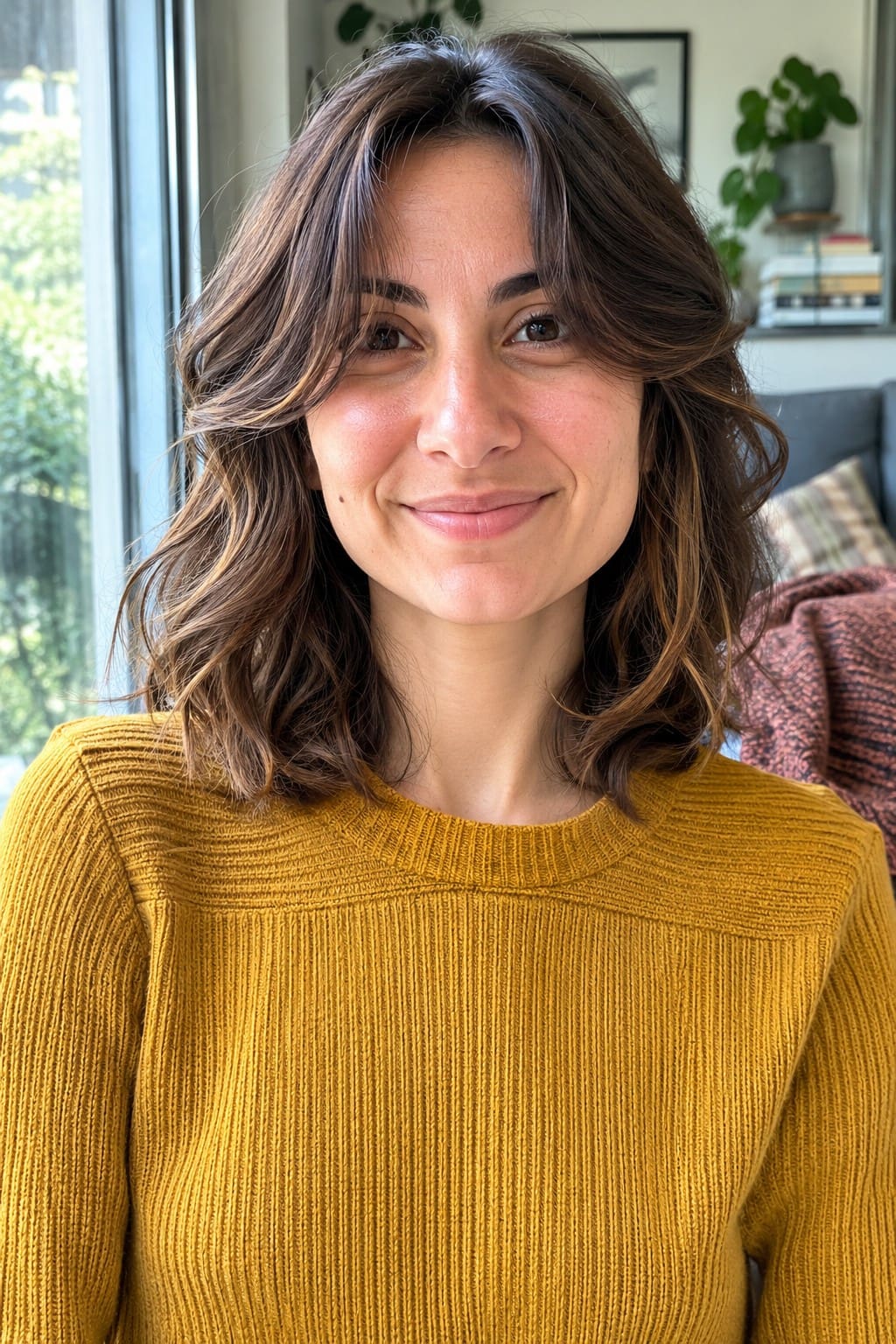
Soft curtain bangs split at the center and sweep toward the cheekbones on this shag.
It's first on the list because it's the easiest shag to commit to, since the bangs grow into face-framing layers instead of a stubby fringe.
Ask for the shortest layer at the chin and bangs cut to the cheekbone. The fringe needs a round brush and about five minutes most mornings, or it splits unevenly.
Oval and long faces look most balanced with the cheekbone-level fringe.
Wolf Cut
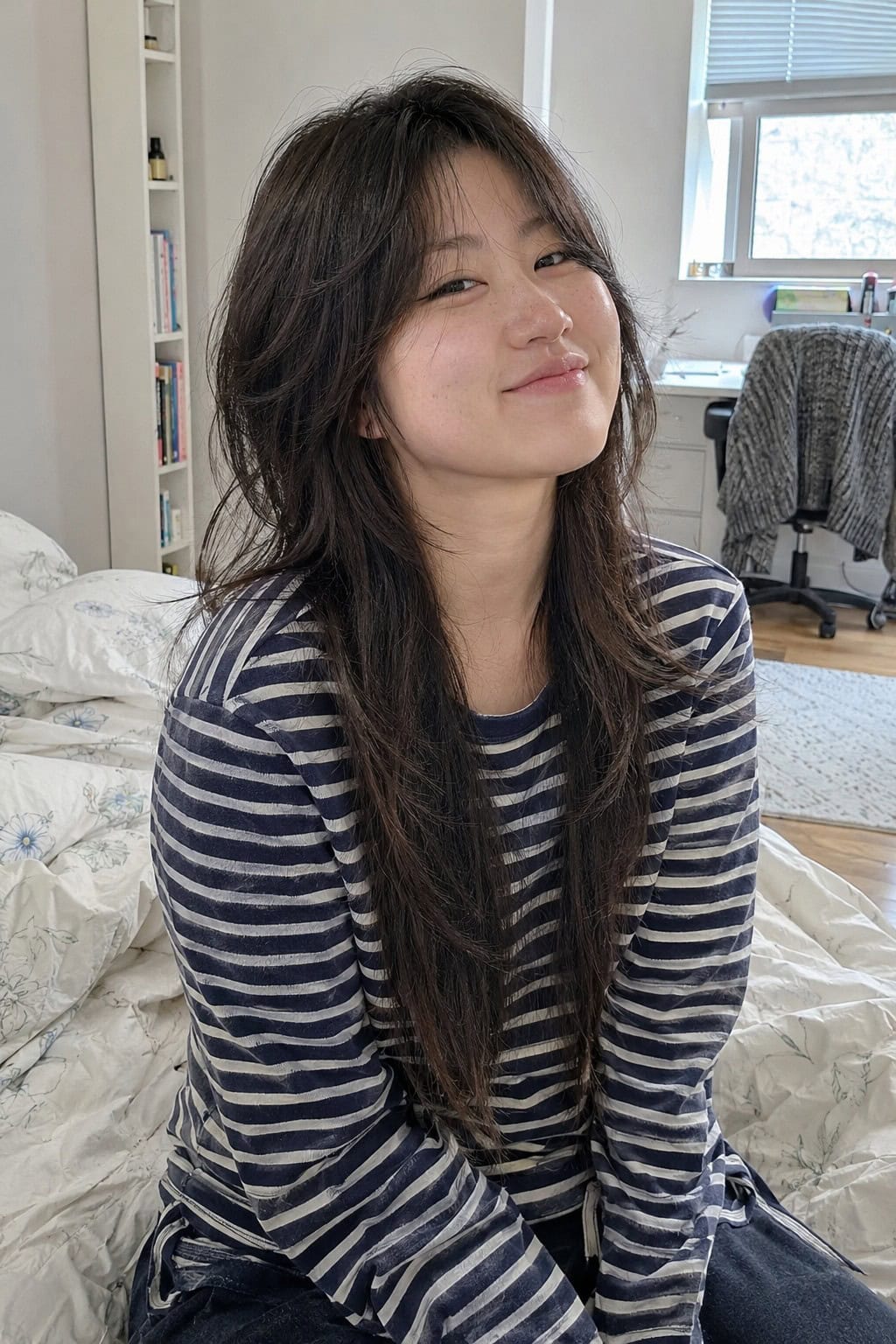
A wolf cut looks bold and a little wild, with big volume at the crown and wispy ends past the shoulders.
Unlike a classic shag, the crown is cut much shorter than the length, so the contrast is obvious. Straight and wavy hair with medium density hold that shape, while fine hair often looks stringy at the ends.
Rough-drying with your fingers is enough to style it. Expect an awkward stage around month three as the crown grows into the length.
Shaggy Bob
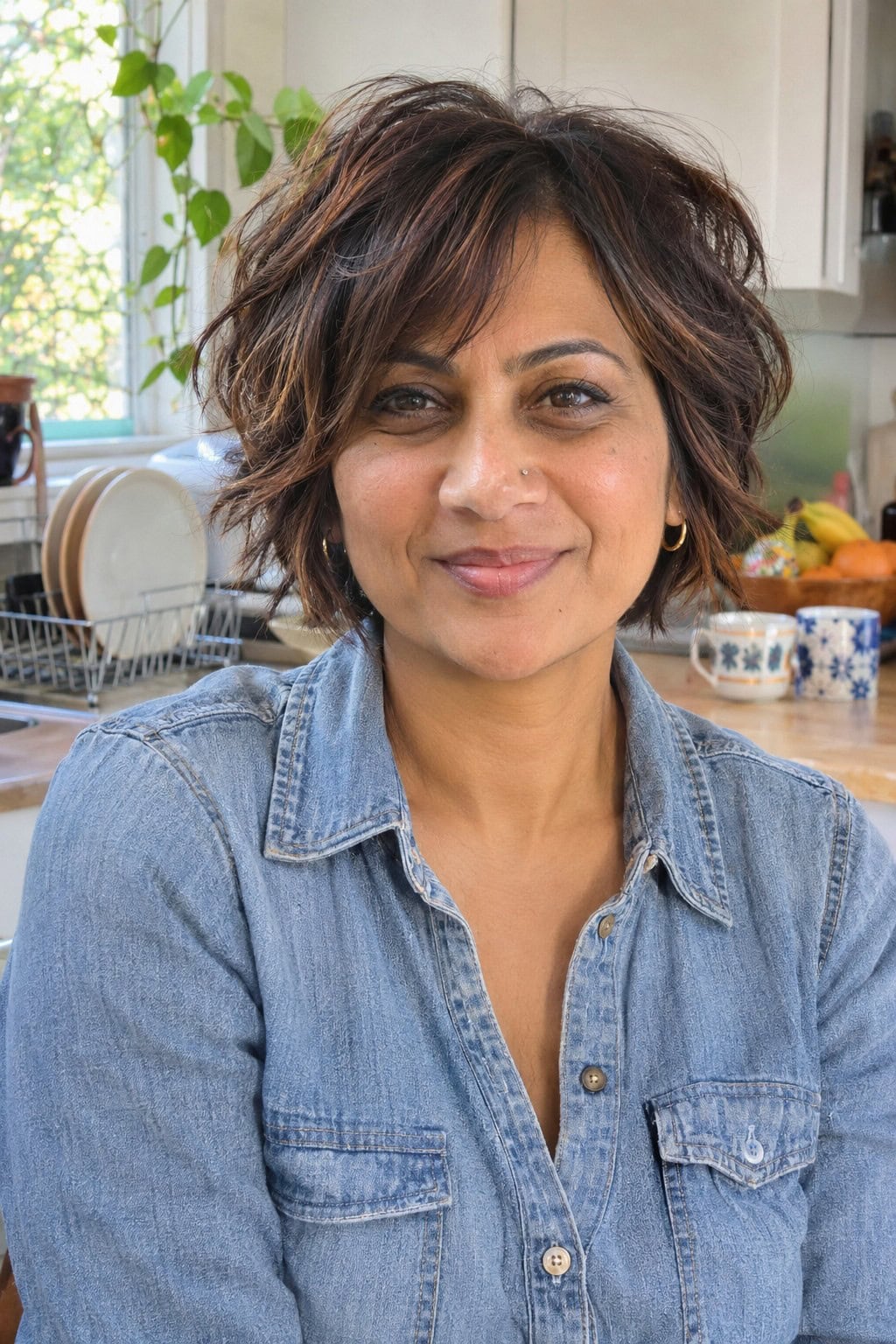
Chin-length and full of movement, the shaggy bob feels lighter than a classic blunt cut.
Square and heart-shaped faces benefit most, because the choppy hemline softens a strong jaw.
It air-dries well with a texture spray and grows out into a lob with little fuss. Very thick hair can puff into a triangle shape unless the stylist removes weight underneath.
Request the shortest layers at the cheekbones and the back cut level with the chin.
Long Shag

Long hair keeps its length with this cut while gaining shape around the face and crown.
It's the safest pick for anyone nervous about a big change. Layers start at the cheekbones and continue to mid-back, so you lose an inch or two at most.
The shape is subtle, and fine straight hair may barely show the layers without a curling wand. Thick or wavy strands show the shape clearly and need only a light mousse.
Curly Shag

Curls look rounder and more defined in a shag than in one-length cuts.
Loose 3A curls through tight 3C spirals can all wear it. Layers remove the triangle shape that long, one-length curls often fall into, which is the main reason to choose it.
Find a stylist who cuts curls dry, one by one, since a wet cut can shrink unevenly. Bangs should be cut longer than you expect.
A leave-in plus gel is needed every wash day, because this cut looks frizzy without definition.
Shaggy Pixie
Women who want short hair with more texture than a sleek crop love this shaggy pixie.
Piecey layers fall over the forehead and around the ears, and the top stays long enough to push forward or sideways. Styling takes a minute with a pea-sized amount of matte paste.
The cost is upkeep, with trims every five to six weeks to keep the nape neat. Growing it out also takes months, so treat it as a real commitment.
Choppy Shag Lob
This lob grazes the collarbone and has a broken-up, choppy hemline that looks textured even when straight.
Fine to medium straight hair gains body from it, which is why it ranks so high. Compared with the shaggy bob, the extra length still fits into a ponytail.
Point-cut ends work better here than heavy layers. Without a flat iron or wand, the ends can look flat and unfinished on straight hair, so budget ten minutes of styling.
Shag Mullet
With short sides and a longer back, the shag mullet has an edgy, confident look.
The difference from a wolf cut is the sides, which sit close to the head instead of blending into the length. Sea salt spray at the crown is all the styling it needs.
It's polarizing, and it can look dated if the back grows past the shoulders. Trims every six to eight weeks keep the contrast sharp.
Dense, wavy hair shows the shape most clearly, while fine hair often loses the separation.
Hush Cut
If you like a soft, polished shape, the hush cut gives you one with very little effort.
This Korean-style shag uses wispy face-framing layers and thinned ends rather than choppy texture. Straight or slightly wavy hair at shoulder length is the right base, and it's the gentlest option here for conservative workplaces.
Anyone wanting obvious shag texture will find it too subtle. It also relies on a round brush to set the front pieces, and air-drying leaves it flatter.
'70s Feathered Shag
The '70s feathered shag is back, with big volume and sides that flip away from the face.
Choose it for maximum volume, since nothing else in this roundup has as much lift at the sides.
That flip doesn't happen on its own, though. Each side layer needs a large round brush and about fifteen minutes of blow-drying, and humid weather undoes it fast.
Oval and heart-shaped faces carry the width well, and thick, wavy hair keeps the feathering longest.
Micro Bang Shag
There's nothing subtle about micro bangs cut well above the eyebrows.
It earns a spot for impact, giving a shoulder-length shag a graphic, fashion-forward frame. Oval faces and strong brows can pull it off.
The risks are real, so think it through. Round faces can look wider, a bad cut can't be hidden, and the fringe needs a trim every three to four weeks.
Curly hair needs the bangs cut noticeably longer to allow for shrinkage.
Shag With Side-Swept Bangs
You get a softer, more romantic frame from long side-swept bangs on a shag.
This is the lowest-risk fringe of the bunch, since side bangs tuck behind the ear on bad days and grow out gradually.
A cowlick at the front hairline can fight the direction, so check yours before booking. Round and square faces gain a diagonal line that breaks up their width.
Dry the fringe with a flat brush toward the side you want it to fall.
Fine Hair Shag
A fuller, thicker look is possible on fine hair with this softer shag.
Low-density hair that's straight or slightly wavy sees the biggest difference. The cut uses fewer, longer layers and keeps weight near the hemline, because too many short pieces leave thin, see-through ends.
It won't make fine hair dense, so the goal is a fuller shape rather than more hair. Volumizing mousse and a rough-dry are needed most days to get the lift.
Thick Hair Shag
After this shag, very thick hair feels lighter and moves much more freely.
It's included because dense hair shows shag layering more clearly than any other texture. Internal layers are cut underneath to remove bulk, so the top still looks smooth.
Coarse or wavy hair with high density responds well to this kind of thinning.
The weight removal wears off as hair grows, so the cut feels heavy again after about ten weeks. Thinning shears used too aggressively can also leave short, frizzy pieces sticking out.
Silver Gray Shag
A short silver shag, cut just below the ears, looks modern without much effort.
Women in their 50s, 60s, and 70s get a cut that needs only a dab of cream through dry hair.
Piecey layers on top add lift at the crown, where gray hair can lie flat. Coarse gray strands can stick out between trims, so book one every six weeks.
Silver also yellows over time, which means a purple shampoo once a week.
Natural Coily Shag
It's easy to see the rounded, layered shape of a coily shag from every angle.
It's one of the few shags built around shrinkage instead of fighting it. Black women with type 4 hair can wear it tapered at the sides and full at the crown.
The cut needs a stylist experienced with coils, which can mean a longer search and a higher price. Definition also takes work, with a twist out or braid out and custard or jelly.
Bangs are cut longer to allow for shrinkage.
Short Curly Shag
When curls are cut short and layered, they bounce up into a round, playful shape.
This version sits at the chin after drying, and stacked layers keep the back from going flat. Wash day is fast, with curl cream scrunched into wet hair and a diffuser on low.
Loose 3A and 3B curls hold this length well. Tighter patterns can shrink above the ears, and there's no length left to tie back on hot days.
Razor Shag
Sleek but piecey is the finish a razor shag gives straight hair.
A razor creates soft, tapered ends instead of the blunt lines scissors leave, which gives straight hair movement it usually lacks.
Medium-density straight hair is the ideal type for it. Curly or very fine hair can frizz or look stringy after razor cutting, and the ends need trims every eight weeks before they fray.
A smoothing cream and a quick pass with a flat iron keep the pieces defined.
Balayage Shag
Few cuts show off blonde balayage as well as a long, wavy shag.
Each layer catches the lighter pieces, so the color looks dimensional instead of stripy. Hand-painted lightening also grows out softly, with no harsh root line.
It's a two-part commitment, with a color appointment that can take several hours. Lightened ends turn drier and brassier over time, so a heat protectant and blue toning shampoo are musts.
Brunettes who want blonde without full highlights get the most from it.
Copper Shag
Copper color and choppy layers make a warm, eye-catching combination on a shag.
Fair and olive complexions with warm undertones pair naturally with copper shades. The shoulder-length cut puts face-framing pieces right where the brightest tones show.
Red tones fade faster than most colors, so plan on a gloss or refresh every four to six weeks. A color-depositing conditioner, sulfate-free shampoo, and cool rinses slow the fade.
Skip it if you want low-maintenance color.
Shag With Blunt Bangs
Pair full, blunt bangs with a shoulder-length shag for a strong, retro look that stands out.
The heavy fringe skims the brows, while the layers around it stay soft and choppy. That contrast is the reason to choose it over curtain bangs, which blend in more.
Long faces and high foreheads get balance from the straight line across the top.
Blunt bangs show oil quickly and need a monthly trim to stay out of your eyes. Strong cowlicks can make them split, too.
Asymmetrical Shag
One side falls an inch or two longer than the other, giving this shag a modern, uneven shape.
It's worth choosing if you want a subtle twist that most people notice only up close.
Round and oval faces both work, since the longer side adds a vertical line.
The look depends on keeping the same deep side part every day. Flip the part and the shape collapses, and uneven grow-out shows quickly between cuts.
Money Piece Shag
Your face looks brighter with a money piece framing a soft, collarbone-length shag.
Only the two front sections are lightened, so it usually costs less than full balayage. Curtain-style layers let those pieces swing forward.
Dark brunette and black hair create the strongest contrast. That same contrast makes regrowth obvious within a couple of months, and the strip can turn orange without regular toning.
Bleach so close to the face also leaves those pieces drier than the rest.
Undercut Shag
Nobody sees the shaved nape on this shag until the hair is pinned up.
Very thick hair is the main candidate, since thin hair gains nothing from losing weight.
A short undercut at the back removes weight, which can cut drying time and help the jaw-length layers sit flatter. Wear your hair up and the shaved section becomes a hidden edge.
Clipper touch-ups every three to four weeks keep it crisp, which is more upkeep than the top needs. Growing out an undercut is also slow and awkward.